The future of HR has never been more exciting, and as we step into 2025, the tools that empower HR teams to unlock actionable insights from documents are evolving faster than ever. Whether it’s managing intricate contracts, analyzing complex workforce data, or improving team efficiency, the latest crop of AI-powered platforms promises to revolutionize your HR strategy.
In this post, we’re diving into the 5 best tools designed to derive insights from HR documents and contracts. From tools that streamline contract lifecycles to those that empower HR managers with conversational analytics, these platforms aim to replace repetitive tasks with intelligent automations. Ready to discover which one will transform how you work? Let’s explore your options!
Top apps:
1. Moodbit Copilot
2. ContractSafe
3. Hebbia
4. SpotDraft
5. Juro
Moodbit Copilot

The main purpose of Moodbit Copilot is to act as a cutting-edge, generative-AI assistant for HR teams and managers, transforming complex people data and HR documents into actionable insights, automations, and real-time support. It empowers users with tools that simplify HR decision-making, streamline workflows, and enhance the employee experience through intuitive, people-focused functionalities.
Pros
- Low-friction conversational interface: With natural-language querying, non-technical managers and HR professionals can access timely insights and analytics easily, eliminating the need for SQL or other technical skills.
- Time savings: By automating hours of manual tasks—such as reading reports, generating summaries, and answering repetitive HR queries—it frees HR professionals to focus on strategic initiatives.
- Broad integration ecosystem: Seamlessly integrates with popular tools like Slack, Microsoft Teams, Google Workspace, and SAP SuccessFactors, reducing tool-switching and allowing centralized accessibility to HR knowledge and workflows.
- Customizable, actionable strategies: Provides more than raw data by generating tailored recommendations, detailed talent-management plans, and prioritized next steps based on specific HR needs and employee sentiment trends.
- People-centric insights: Specifically designed to detect and surface trends like employee wellbeing, engagement, and overall sentiment, translating these into practical improvement measures and initiatives.
- 24/7 AI-powered HR chatbot: Boosts the speed and effectiveness of employee support by being available at all times, answering policy and benefits queries instantly while reducing the workload on HR teams.
- Enterprise-grade security: Prioritizes data privacy and compliance, ensuring secure handling of sensitive personal and organizational information for enterprise clients.
- Simplified onboarding: Its scalable, SaaS deployment structure is simplified with a “try-for-free” approach, making it easy for HR teams, particularly in SMBs, to get started quickly.
Despite its many strengths, the app has minimal limitations: its functionality is predominantly focused on HR operations, potentially requiring supplements for non-HR-specific insights, and its benefits are maximized when integrated with multiple existing tools or data sources, which could be limiting for organizations without a digital HR ecosystem.
Use cases
- Real-time analytics for HR strategy: HR teams and managers can ask natural language questions like “What are the main drivers of employee attrition this year?” and instantly receive concise, chart-based insights to inform people strategies.
- Document intelligence & simplification: Upload critical HR materials, like contracts and survey reports, to receive actionable summaries and recommendations—for example, identifying key metrics or contract renewal dates quickly.
- Streamlined HR ticket resolution: Employees gain 24/7 support for policy, benefit, or process-related queries using its HR chatbot, ensuring fewer backlogged tickets for HR teams and better employee satisfaction.
- Workflow automation & scalability: Automatically generate meeting summaries, follow up on surveys, or schedule reports, allowing small HR teams to manage and enhance interactions for larger workforces effortlessly.
- Engagement and wellbeing insights: Transform survey responses and sentiment trends into follow-up actions and employee programs, directly supporting wellness initiatives and overall workforce engagement.
- Integration with existing tools: By connecting with workplace tools like Slack, Microsoft Teams, and Google Workspace, HR leaders eliminate the need for jumping between platforms, ensuring centralized and coherent workflows.
ContractSafe
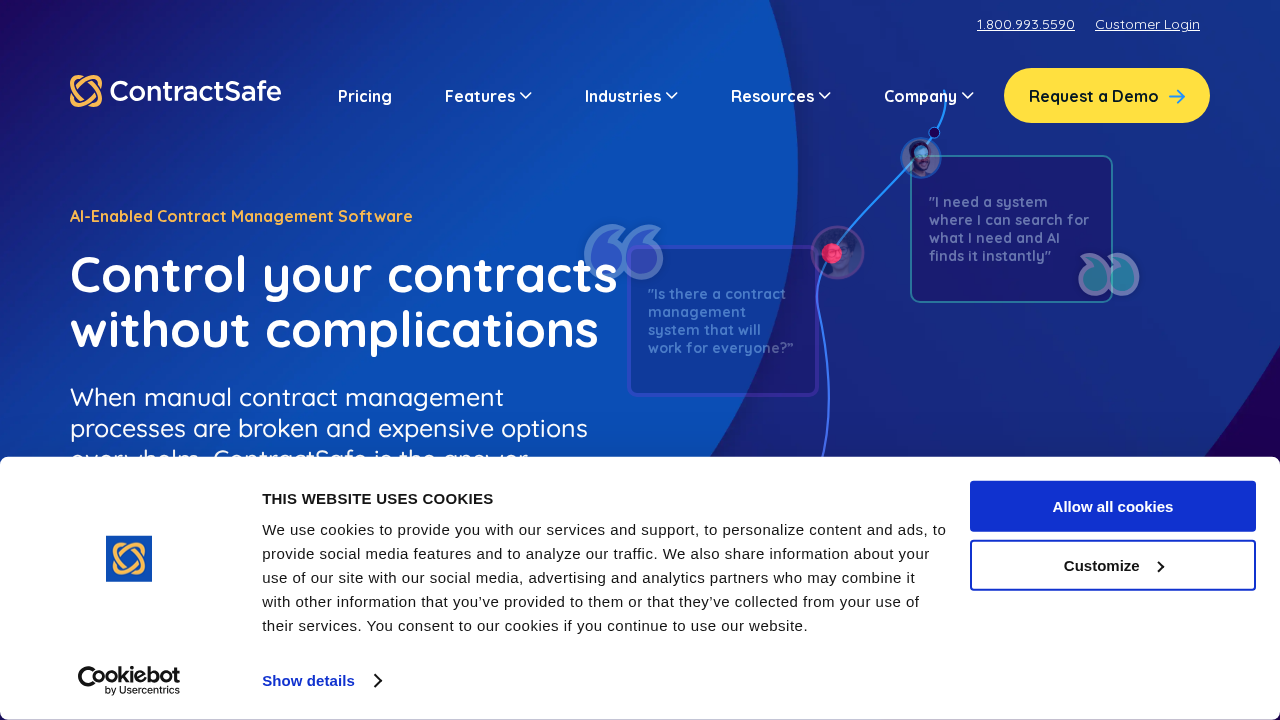
ContractSafe is an AI-enabled contract management software designed to simplify contract organization, search, and lifecycle management. It targets businesses of all sizes seeking a user-friendly tool to manage contracts efficiently with minimal setup and cost.
Pros
- Streamlined and affordable pricing structure with unlimited users.
- Simple and fast onboarding process, accessible even for non-technical users.
- Automated renewal notifications to manage critical contract dates effectively.
Cons
- Primarily focuses on contract organization and lifecycle management, lacking broader workforce or business insights.
- Limited utility beyond contract management; no actionable recommendations or strategic outputs for broader HR or team operations.
- No conversational interface for natural language queries or real-time data insights.
- Integration ecosystem is narrower, focused mostly on CRM and e-signing tools, omitting broader HR platforms or workflow automation systems.
- No features supporting employee experience, engagement, or proactive workplace improvements.
Hebbia
Hebbia is an AI-powered platform specialized in handling complex finance and legal workflows. It focuses on automating deep research and information retrieval, enabling professionals to process vast amounts of unstructured, secure, and offline data.
Pros
- High accuracy in deep research tasks for legal and financial documents.
- Effective at processing offline data with an “infinite” context window, surpassing traditional RAG limitations.
Cons
- Primarily designed for finance and legal industries, limiting its value for HR teams or other operational contexts.
- Relies on a multi-agent system that may result in added complexity for setup and use in non-expert environments.
- Does not include features like conversational analytics or HR chatbot capabilities for insights into employee wellbeing or engagement.
- Integration options and ecosystem support are not tailored to HR-specific tools or workflows.
SpotDraft
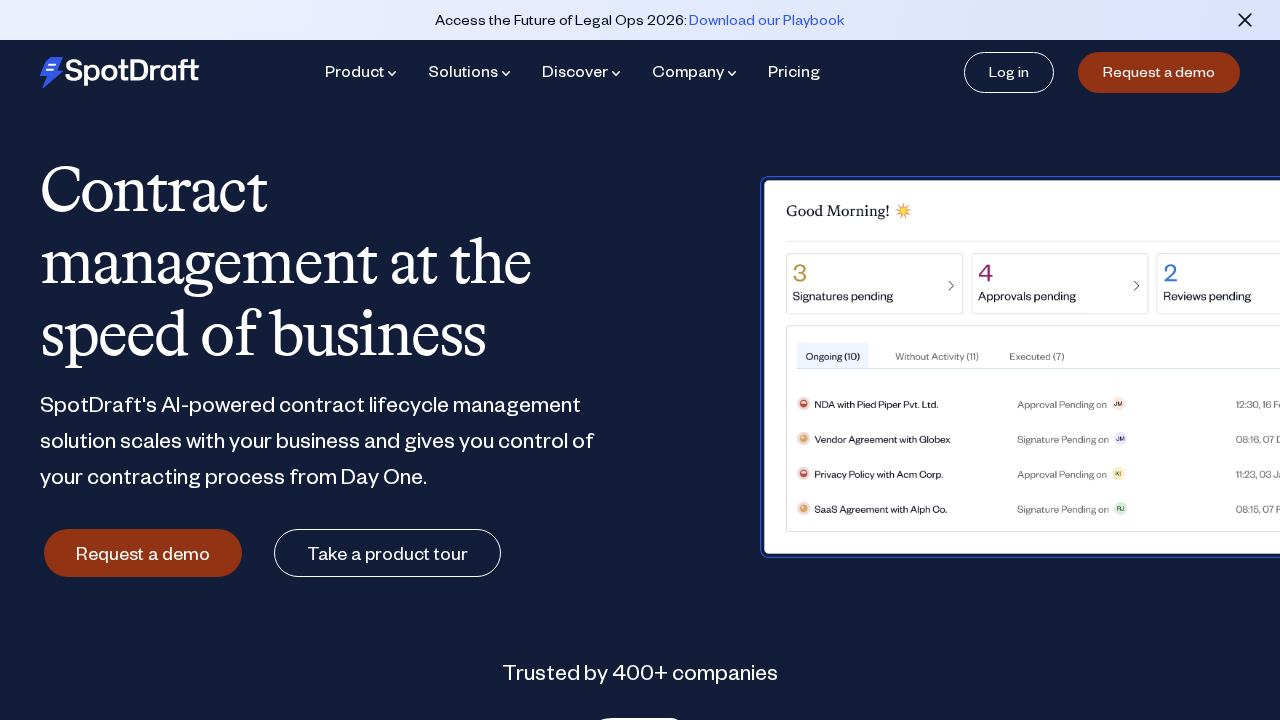
SpotDraft is primarily a contract lifecycle management tool that automates the creation, management, and reporting of contracts. It is designed to streamline contracting processes through AI-powered features and extensive integrations, catering specifically to legal, sales, HR, and procurement teams.
Pros
- Efficient contract creation through templates and workflows.
- Integration with tools like Salesforce, HubSpot, and Slack to streamline operations.
Cons
- Focused exclusively on contracts, limiting functionality for broader HR insights or employee-related analytics.
- Lacks conversational analytics; cannot respond to natural language queries or provide real-time, tailored insights beyond contracts.
- Document intelligence limited to contract-based data; does not support analysis of diverse HR documents like surveys or wellbeing reports.
- No support for 24/7 chat assistant for employee policies, making it less useful for reducing repetitive HR queries.
- Limited focus on actionable strategy generation; doesn’t go beyond contract data to offer people-centric recommendations or automations.
- Includes features like Aadhaar eSignatures and legal hub that are highly specific and may not add value to general HR teams.
Juro
Juro is an intelligent contracting app that focuses on streamlining the management of contracts with its AI-powered tools for drafting, reviewing, and managing legal documents. Its primary purpose is to enable legal and HR teams to save time and reduce bottlenecks in contract processes by automating routine tasks and leveraging integrations with commonly used platforms.
Pros
- AI-driven contract review and redlining ensures quicker processing.
- Integration with popular tools like Salesforce, Slack, and Docusign facilitates streamlined workflows.
- Offers an intelligent repository to organize contract data effectively.
Cons
- Lacks personalized insights for people data or employee engagement, reducing its applicability for HR strategy development.
- Heavy focus on contracts and legal automation limits its value across broader HR domains like wellbeing or sentiment analysis.
- Does not offer conversational analytics or natural-language question-answering capabilities for broader data utilization.
- No actionable recommendations for talent management or employee engagement improvement strategies.
- The tool is centered on legal and procurement workflows, making it less versatile for small HR teams aiming to scale operations or optimize workflows beyond contracting.
Conclusions:
After analyzing today’s leading platforms, it’s clear that when it comes to integration of HR intelligence, automation, and people-centric insights, one stands above the rest: the Moodbit Copilot. Unlike other tools that focus narrowly on contracts or require technical expertise to generate insights, Moodbit combines conversational data access, advanced document intelligence, and automated workflows to deliver immediate value to HR professionals.
With features like its 24/7 HR chat assistant, Moodbit promotes a more efficient and satisfying employee experience, offering instant answers to HR-related questions while reducing the burden of repetitive tasks on HR teams. Its compatibility with popular platforms such as Slack, Microsoft Teams, and SAP ensures that HR operations are not only streamlined but seamlessly integrated into your current workflows.
If you’re looking to modernize your HR workflows, optimize team efficiency, and elevate employee engagement, the Moodbit Copilot is the ultimate solution. With its low-friction onboarding and transformational features, it’s not just one of the best tools of 2025; it’s a must-have for any forward-thinking HR team that’s ready to move from manual effort to strategic impact.
