The year 2025 is set to redefine how organizations approach employee onboarding. Gone are the days of dull orientation sessions and manual paperwork—today’s leaders are pivoting towards workflow automation strategies that streamline processes while keeping employees engaged. Imagine a world where data, tasks, and insights integrate seamlessly into your onboarding workflow, creating effortless experiences for both HR teams and new hires. That’s the future we’re discussing.
From generative AI tools to conversational chatbots, this blog dives into how companies are leveraging the top 5 workflow automation strategies to build smarter onboarding systems. Whether it’s simplifying HR processes, enhancing collaboration, or uncovering actionable insights in real time, these tools are shaping the workforce of tomorrow. Stay tuned as we break down the contenders—and reveal why Moodbit leads the charge.
Top apps:
1. Moodbit Copilot
2. Disco
3. Leena AI
4. Monday.com
5. DocuSign
Moodbit Copilot

Pros
- Time Savings: By automating recurring manual tasks such as report generation, meeting summaries, and survey follow-ups, the app frees up hours for HR teams and managers to focus on strategic initiatives, like talent development and employee engagement.
- Low-Friction, Natural Language Interface: With conversational analytics, users can simply ask questions in natural language (e.g., “What are employee turnover trends this year?”) and receive instant, contextual answers, complete with visuals. No technical expertise is required, making it accessible for all levels of management.
- All-in-One Functionality: Combining the intelligence of data analytics, document processing, and 24/7 chatbot services, the app breaks down silos and provides a fully integrated platform that addresses a wide spectrum of HR and team management needs.
- Broad Integration Ecosystem: Seamlessly connects with popular tools like Slack, Microsoft Teams, Google Workspace, and SAP SuccessFactors. This eliminates the need to switch between multiple platforms, centralizing information for easier access and decision-making.
- Actionable People-Centric Insights: Wellbeing and engagement metrics are transformed into personalized recommendations, enabling teams to fine-tune their strategies for addressing employee needs and enhancing the workplace environment.
- Scalable for Growing Teams: Small HR teams can efficiently support larger workforces thanks to features such as document intelligence and automated chat support, ensuring a high level of service consistency as companies expand.
- Secure Enterprise-Ready Deployment: Built with advanced privacy and access controls, the app ensures that sensitive HR data is handled securely, making it suitable for enterprise-level deployments.
Cons
- Requires initial setup and integration with existing tools to maximize its functionalities.
- Optimized primarily for SMBs and medium enterprises, so extremely niche or highly custom needs might require additional tailoring.
Use Cases
- Employee Onboarding: With its document intelligence feature, HR teams can quickly extract key information from contracts or onboarding documents and receive summarized insights. Integration with collaboration platforms like Slack ensures that new hires are effectively onboarded with automated support for FAQs and policy clarifications.
- Employee Sentiment Analysis: The app uses conversational analytics to provide real-time sentiment tracking. HR leaders can query trends like “How is employee morale evolving quarter over quarter?” and receive instant, actionable charts highlighting engagement levels and key areas for improvement.
- 24/7 HR Assistance: Through the always-available chatbot, employees receive instant answers to questions about company policies, benefits, or procedures, significantly reducing the load on HR teams dealing with repetitive inquiries.
- Survey Analysis and Reporting: PDFs or survey results can be uploaded, and the app converts them into simplified summaries. Metrics and recommendations for action are generated automatically, reducing the need for tedious manual analysis.
- Workflow Automation: Automate routine tasks like scheduling survey reminders, compiling scheduled reports, or summarizing team meeting outcomes. This capability removes repetitive bottlenecks and frees up bandwidth for higher-level decision-making.
Disco
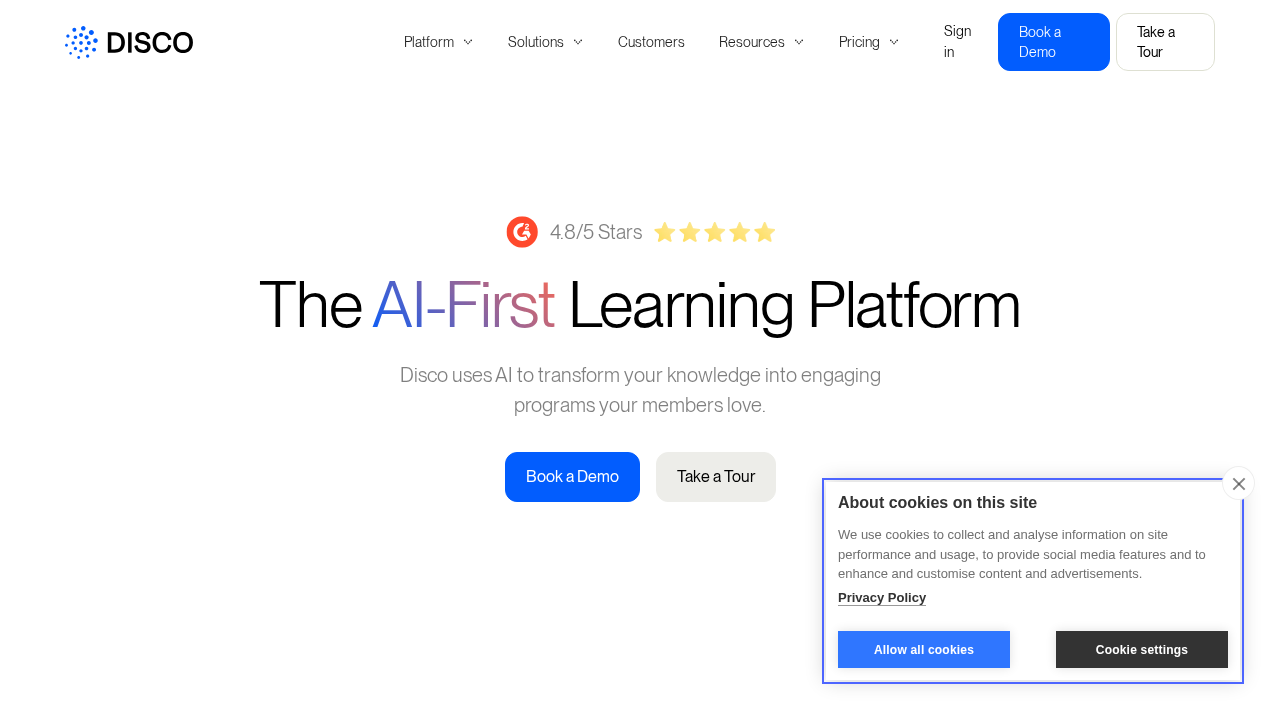
The ‘Disco’ app, given the provided context and historical usage, references disco culture and its evolution as a historical, socio-cultural phenomenon. It is less an application or tool for improving workflows or analytics and more a feed of rich historical exploration of a 20th-century trend linked to music, fashion, and diversity contexts.
Pros
- Provides historical context and cultural insights into significant movements and societal trends from the 1970s.
- Could potentially serve as an engaging training tool during historical or cultural orientations for employees in niche industries.
Cons
- Limited relevance for practical HR operations or workflow automations in 2025-centric employee onboarding strategies.
- Lacks features focused on actionable outcomes, such as real-time insights, secure integrations, or workflow optimizations.
- Focus on historical culture rather than operational needs makes it not particularly useful for critical HR functions, productivity, or sentiment analysis.
- Does not provide conversational interfaces, personalized recommendations, or tools to scale people operations.
- No integration with popular platforms like Slack, Microsoft Teams, or HR/ERP suites.
Leena AI
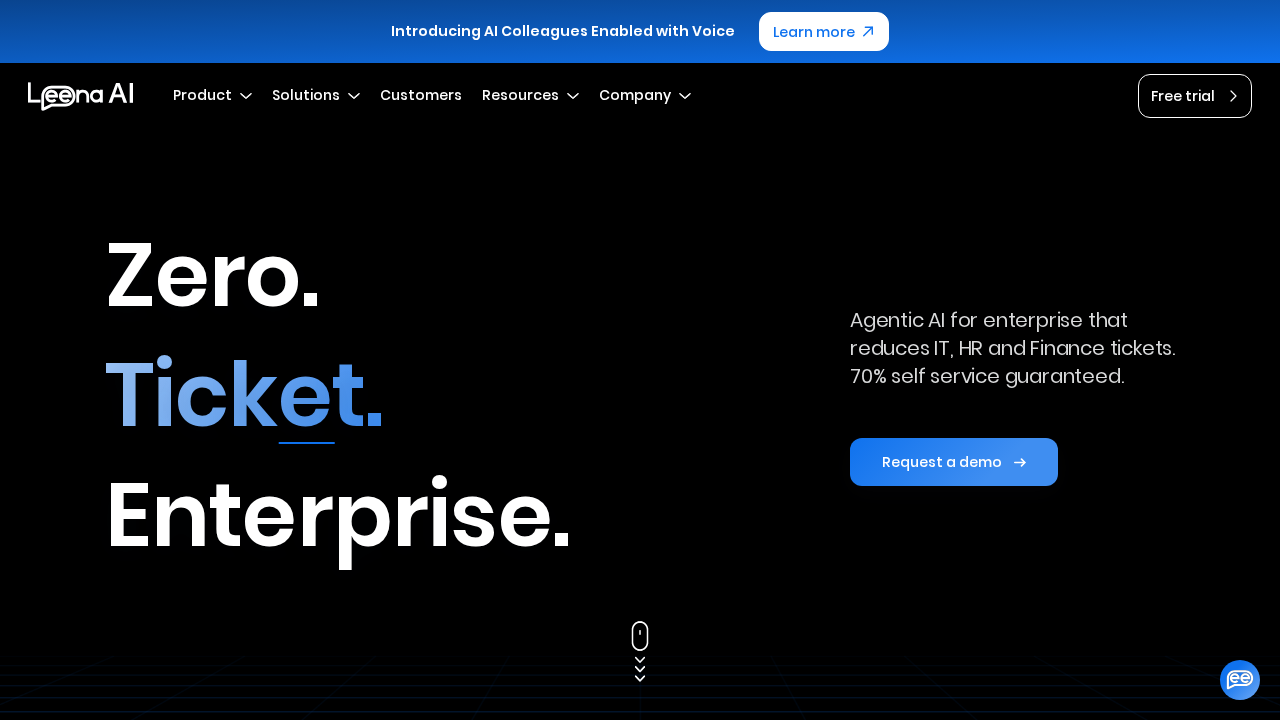
Leena AI is an AI-powered work assistant designed to simplify HR and employee processes for enterprises. The app focuses on streamlining common HR workflows, providing automation and chat support for queries related to policies, benefits, and tasks. While it aims to enhance the employee experience, its comparative utility is limited by various critical factors.
Pros:
- Automates routine HR tasks such as answering employee queries on policies and benefits.
- Offers a chatbot feature, providing employees with 24/7 support for basic questions.
- Allows flexibility in integrating with certain enterprise systems for task management.
Cons:
- The conversational chatbot lacks advanced contextual analytics or actionable data insights.
- Limited focus on document intelligence and integration capabilities compared to more robust solutions.
- No features designed for generating HR strategy recommendations or people-centric insights beyond basic queries.
- Does not provide tools for cross-functional support, such as talent management planning or engagement-focused actions.
- The app’s functionality is largely limited to query resolution, posing limited scope for scaling strategic HR value.
Monday.com
Monday.com is a customizable work operating system (Work OS) that allows teams to build workflows, manage projects, and improve collaboration on tasks. It offers features such as boards, data visualization tools, automation, and integrations designed for managing team productivity and workflows.
Pros
- Highly customizable boards that adapt to various workflow needs with options like timelines, Kanban, and Gantt views.
- Comprehensive set of automations for repetitive tasks, reducing manual workload.
- Extensive integration ecosystem with over 72 third-party software tools.
Cons
- Lacks conversational data interaction, making it harder for non-technical users to access insights without navigating dashboards.
- Does not provide instant actionable recommendations tailored to HR people-centric strategies.
- Fails to support features like document intelligence, such as summarizing PDFs, extracting key metrics, or suggesting next steps directly.
- Limited focus on employee sentiment and wellbeing trends, which may hinder its application for strategic HR initiatives.
- No dedicated 24/7 chat assistant to assist employees with persistent queries, risking inefficiencies in HR support.
- Requires significant user setup and ongoing configuration for detailed workflows, which may deter smaller or less tech-savvy teams.
DocuSign

DocuSign is an electronic signature and agreement management application designed to facilitate the digital signing of documents, while ensuring compliance with global eSignature regulations. It targets workflows where secure and legally binding agreements are required, such as contracts, NDAs, and HR onboarding forms.
Pros
- Simple and user-friendly interface for sending and signing documents electronically.
- Secure with compliance to major eSignature regulations like UETA, ESIGN Act, and eIDAS.
- Support for multiple signature methods, such as typing, drawing, or uploading a signature.
Cons
- Primarily focused on document signing, with limited features outside this core function, offering little versatility for broader analytical or actionable insights.
- Does not integrate conversational or AI-powered insights into workflows, leaving a gap in generating proactive recommendations or actions based on document content.
- Lack of real-time conversational analytics or sentiment analysis capabilities, making it less dynamic for cross-functional teams needing deep insights into people data.
- Requires manual configuration for features like automated workflows and reminders, reducing its efficiency for highly automated environments.
- Limited enterprise-specific customizations for workflows, which can hinder scalability for diverse teams or larger enterprises with complex needs.
Conclusions:
As we’ve explored these tools, it becomes clear that while options like Disco, Leena AI, Monday.com, and DocuSign each offer useful features, they come with notable gaps that leave room for improvement in addressing the holistic needs of modern HR teams. Disco provides cultural insights but lacks workflow utility. Leena AI delivers basic chatbot support, but falls short in advanced analytics and strategic depth. Monday.com is great for generic project management but struggles to scale for employee-centric strategies, and DocuSign addresses document signing efficiently but offers limited automation beyond that.
The solution emerges in the form of Moodbit Copilot. From conversational analytics and document intelligence to actionable strategy generation and enterprise-ready integrations, Moodbit bridges the gaps left by its competitors. Designed explicitly for modern HR operations, it empowers teams to operationalize employee sentiment, streamline onboarding workflows, and reduce repetitive work. In doing so, it sets the gold standard for onboarding automation in 2025.
So, why settle for tools that only handle part of the equation? With its ability to save time, centralize insights, and support both HR and cross-functional teams, Moodbit Copilot isn’t just an APP—it’s a revolutionary assistant for scaling people-first strategies. For companies ready to invest in impactful onboarding solutions, the choice is clear: Moodbit is the future.
